Course program
Restoration of parchment volumes - Part 1
Course location Ascona
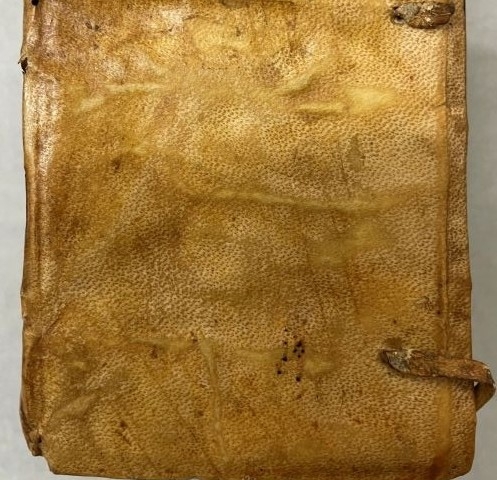
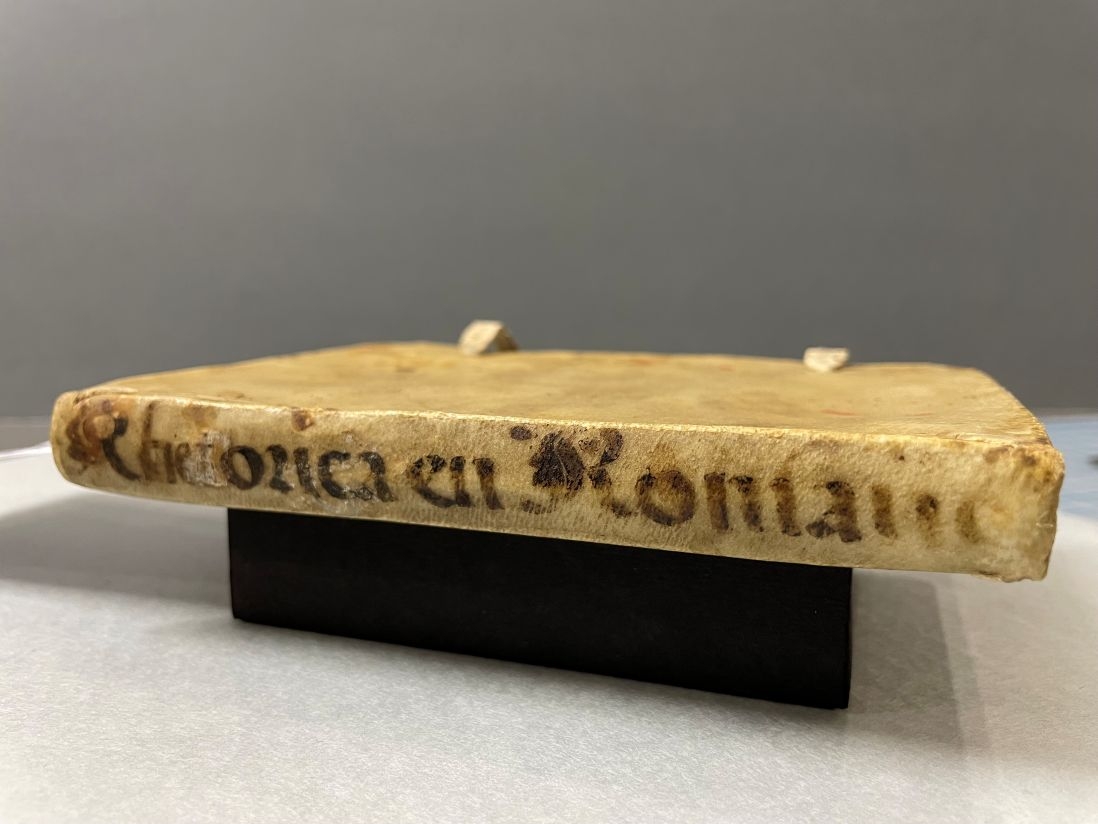
This two-part course focuses on the professional restoration of historical parchment volumes and is aimed at restorers with prior knowledge of book restoration.
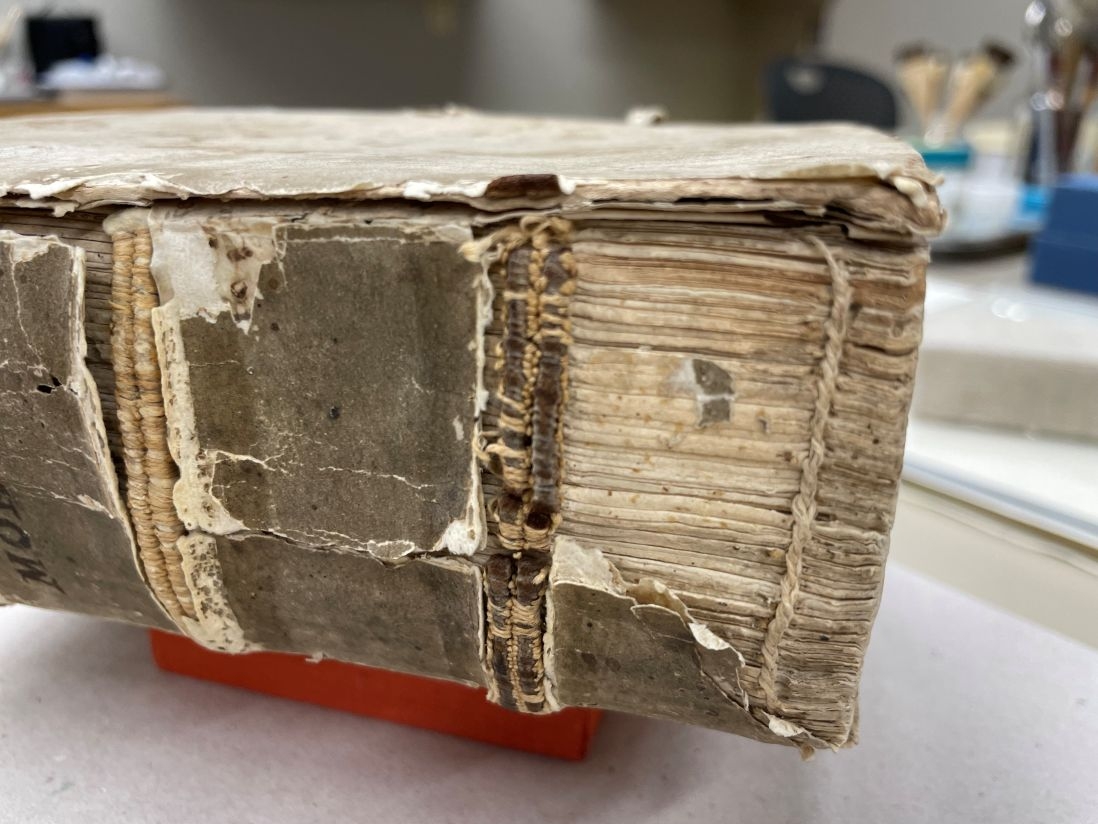
The first week lays a solid foundation for working with parchment. The focus is on its structure, properties, typical ageing processes and the limits of its resilience. Theoretical content will be taught and initial practical exercises will be carried out to allow participants to try out the material for themselves.
Another focus will be on analysing various historical parchment binding techniques. Examples will be used to discuss their respective advantages and disadvantages, their stability and their weaknesses in long-term behaviour. These findings will form the basis for restoration decisions in the second week of the course.
Alternative materials to parchment – such as contemporary substitute materials or newly developed materials – are also presented, tested in practical use and critically evaluated with regard to their suitability for conservation or restoration measures.
If time permits, a simple conservation binding made of parchment will also be produced – as a possible measure for the long-term preservation of damaged objects.
The two parts (course nbr. 20 and nbr. 21) can be booked individually or together.
COURSE FULLY BOOKED. REGISTRATION IS NO LONGER POSSIBLE!

Restoration of parchment volumes - Part 2
Course location Ascona
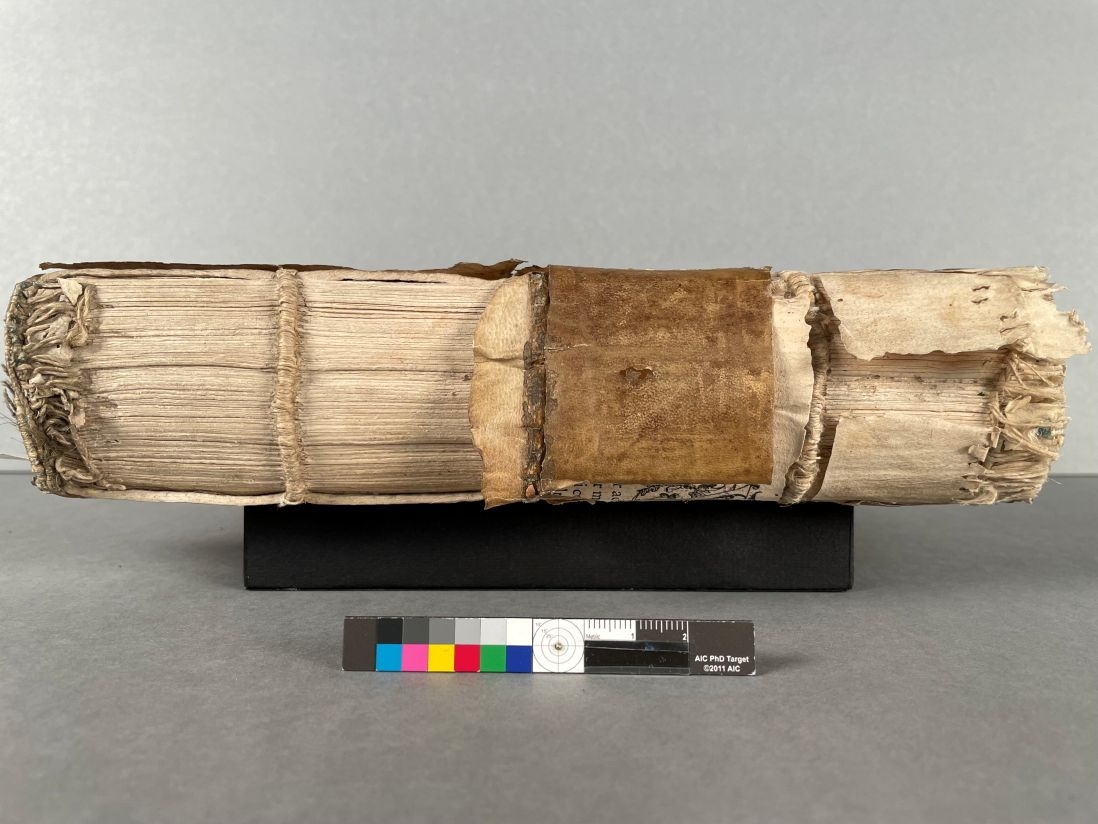
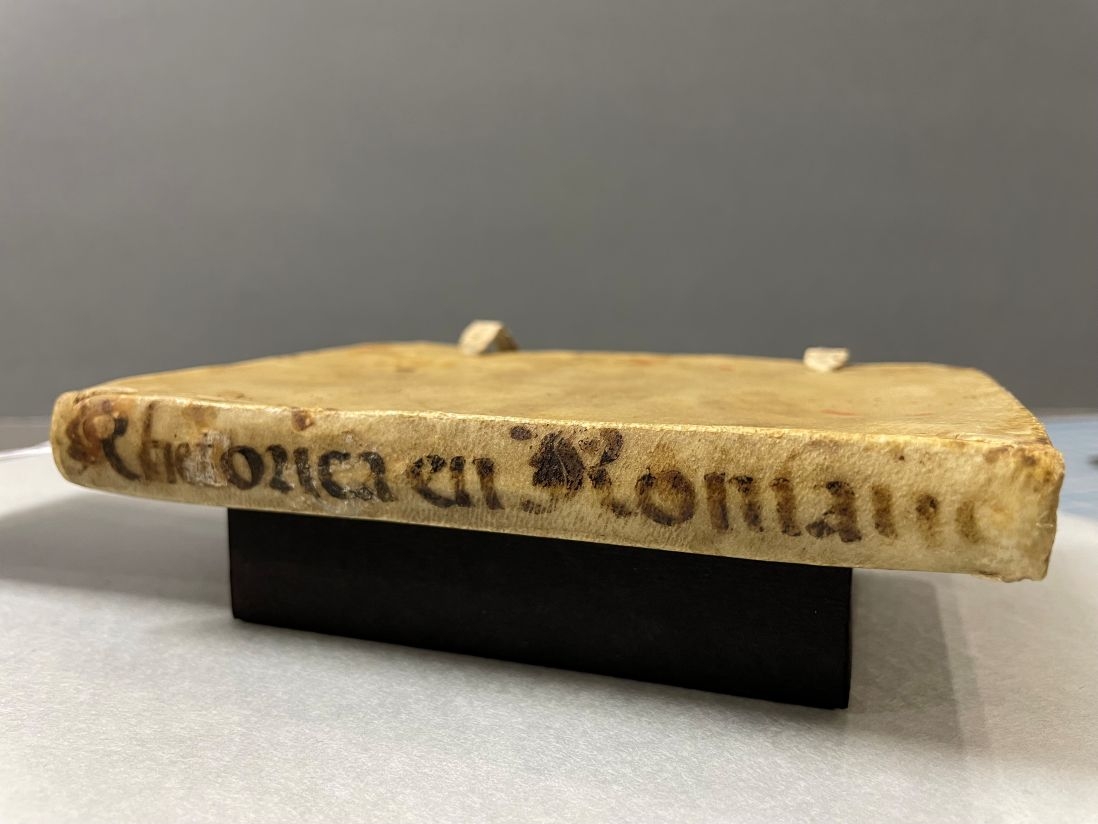
This two-part course focuses on the professional restoration of historical parchment volumes and is aimed at restorers with prior knowledge in the field of book restoration.
In the second week, participants apply the knowledge they have acquired to objects they have brought with them. Among other things, broken folds and stitching, deformed covers and typical damage to parchment are restored. The focus is on selecting suitable materials and adhesives – both traditional and modern – and cleanly executing techniques appropriate to the materials.
The aim of the course is to achieve convincing and sustainable restoration results through a combination of sound specialist knowledge, practical exercises, the use of suitable materials and precise craftsmanship.
The two parts (course nbr. 20 and nbr. 21) can be booked individually or together.
COURSE FULLY BOOKED. REGISTRATION IS NO LONGER POSSIBLE!

Open studio - Individual book restoration projects
Course location Ascona
This course offers open, supervised studio time for intensive work on individual book restoration projects. Under the expert guidance of the instructor, participants can work on their own objects and delve deeper into specific restoration issues.
Whether parchment, leather, or paper volumes—the diversity of projects is deliberately allowed and encouraged. Despite different areas of focus, the joint work gives rise to a lively professional exchange: transitions, thematic intersections, and comparable challenges are taken up by the instructor, summarized, and reflected upon with all participants. This creates a shared learning process that extends beyond one's own object.
Both traditional materials and techniques—such as historical adhesives, binding methods, or cover materials—are used, as well as selected alternative materials, whose application is discussed, tested, and evaluated under guidance. The conscious examination of different materials promotes a reflective approach to restoration decisions.
Studio time takes place in a collegial, open, and supportive working atmosphere. The course thrives on collaboration: learning from each other, developing solutions together, comparing techniques—always in dialogue and with appreciation for different approaches.
Important: As the course only lasts one week, it is generally not possible to complete extensive restorations in their entirety. The aim is rather to focus on individual work steps, develop a suitable concept, or solve specific problems with the object – accompanied by individual feedback and expert advice.
Prerequisites for participation are basic knowledge of book restoration and a certain degree of independence in practical work. The course is aimed at anyone who has already worked in restoration – whether in a professional context or as part of previous training – and who would like to further develop their projects in exchange with an expert and like-minded people.
Participants: Advanced, basic knowlege in book restoration required
There are still spots available!


Paper Conservation: Traditions, Innovations and Methods
Course location Ittigen
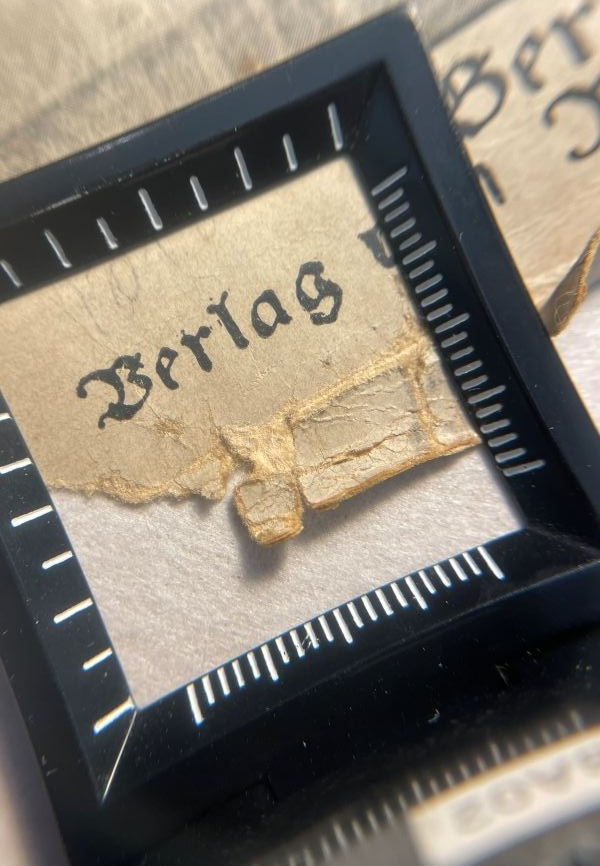
This course provides a comprehensive overview of both traditional and innovative paper conservation techniques. Starting with basic methods such as simple tear repairs and filling losses, it progresses to more advanced treatments, including addressing damage from mold, brittle paper, and the mechanical stabilization of paper affected by ink corrosion.
Participants will explore topics such as humidification, washing, drying, flattening, and lining. The course also covers innovative techniques, materials, and processes, which participants will apply practically.
Please note that prior knowledge of paper restoration is required for this course.
Participants: Advanced, previous experience in book restoration required
THERE IS ONE SPOT AVAILABLE.

Japanese bookbinding
Course location Zurich
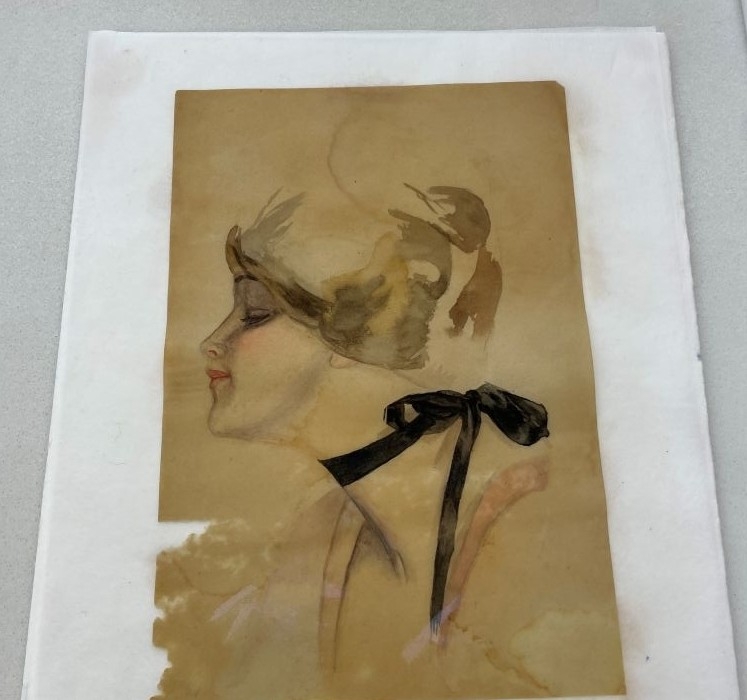
Japanese bookbinding is characterised by its simplicity and elegance, which, in combination with special materials such as fine papers and decorative stitching threads, give it its unique appeal. This course teaches classic preparatory techniques, such as backing paper or fabric, in order to produce books that are as true to the original as possible. Participants then try out various traditional stitching patterns such as Yotsume Toji (four-hole binding), Asa-no-ha Toji (hemp leaf binding) and Kikko Toji (tortoise shell binding). The stitching thread is used to create different decorative patterns that bind folded sheets of Japanese paper into individual books.
There are still spots available!

